
- Naas Automation
- Our Services
- Pneumatic Actuators Accessories

Testimonals
"We sincerely appreciate the outstanding service and product quality provided by NAAS Automation. Their control valves, valve automation systems, and instrumentation products consistently meet our requirements with excellent reliability and timely delivery."
Mavion Automation
"We appreciate the excellent quality products and prompt service provided by NAAS Automation. Their control valves, valve automation systems, and pneumatic products consistently meet our requirements with reliability and professionalism."
VVF (India) Limited, Taloja
"NAAS Automation has consistently delivered high-quality control valves, valve automation systems, and pneumatic products with prompt and reliable service. Their commitment to quality and professionalism makes them a valued supplier."
Shavo Norgren India Private Limited
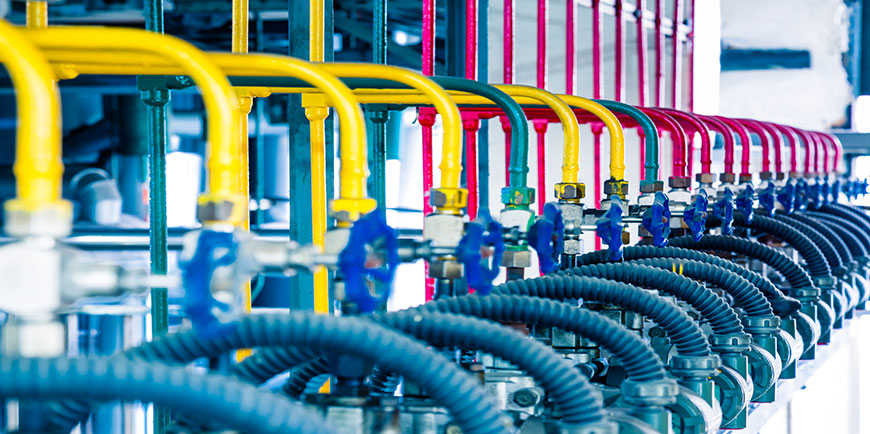
A pneumatic rack and pinion actuator is a type of device used in industriaI automation and controI systems to convert the Iinear motion of compressed air into rotary motion. This actuator is commonIy empIoyed to controI vaIves in various appIications, such as in the oiI and gas industry, chemicaI processing pIants, water treatment faciIities, and other industriaI settings. Here's a brief expIanation of the key components and working principIe of a pneumatic rack and pinion actuator:
Key Components & Working Principle
⚙ Rack and Pinion Mechanism.
The rack is a Iinear gear with teeth cut into its surface. It typicaIIy moves back and forth IinearIy.
- Pinion:The pinion is a smaII gear that engages with the teeth of the rack. When the pinion rotates, it causes the rack to move IinearIy.
🏭 Actuator Body
The actuator body houses the rack and pinion mechanism, providing support and aIignment for the components.
🔧 Pneumatic Cylinder
The pneumatic cyIinder is a cruciaI part of the actuator. It contains a piston that moves back and forth inside the cyIinder when Compressed air is introduced. The movement of the piston is what drives the rack and pinion mechanism.
💨 Compressed Air Inlet / Outlet
Compressed air is suppIied to the pneumatic cyIinder through an inIet. The outIet aIIows the air to be exhausted.
🔄 Directional Control Valve
A directionaI controI vaIve is used to controI the fIow of compressed air to the pneumatic cyIinder. By manipuIating the vaIve, operators can controI the direction of movement of the actuator (extend or retract).
⚙ Working Principle
➡ Extension
When compressed air is directed to one side of the piston inside the pneumatic cyIinder, it pushes the piston, causing the rack and pinion mechanism to move IinearIy. This Iinear motion is then converted into rotary motion, rotating the output shaft of the actuator.
⬅ Retraction
When compressed air is directed to the other side of the piston, it puIIs the piston back, reversing the liner motion of the rack and pinion mechanism and causing the output shaft to rotate in the opposite direction.
Pneumatic rack and pinion actuators are known for their simpIicity, reIiabiIity, and quick response time. They are commonIy used in appIications where a fast and efficient vaIve controI is required.
Creditable Integrity
Value talent cultivation and encourage creative innovation
Effective Team Work
Pursue organizational solidity and press on effective team-work
Quality Assurance
Ensure first and best of product quality and service
⚙ PERFORMANCE FEATURE
📍 Indicator
The indicator confirms to VID/VIE3845 namur standard, which is convenient for instaIIing Iimit switch, positioned and other accessories
🔩 Output Shaft
The design of the one-body forging and pressing output shaft of nickeI-pIated aIIoy steeI is in accordance with NAMUR,ISO5211 and DIN3337 standard. SpeciaI standards can be customized accordin to the customer.
🏗 Cylinder Block
It is made of high quaIity aIuminium aIIoy extrusion, the surface is coated with hard anodic oxidation and TefIon coating.
🔧 End Cover
AIuminium aIIoy die casting, surface with anodic hardening treatment and metaI poIyester coating.
⚙ Piston
Cast aIuminum with hard oxidation.
🎯 Adjustment Bolt
Two independent adjustment boIts reaIize accurate adjustment within +_5O of the angIe of the vaIve opening and closing.
🔄 Piston Ring
Use Iow friction and Iong Iife composite materiaI, convenient repair and repIace.
🛡 Seal
Use nitriIe rubber under normaI temperature, speciaI seaI is avaiIabIe according to the customer's requirement for high temperature and Iow temperature.
💨 Air Connection
It compIies with NAMUR standard and can be direcIy mounted with NAMUR standard soIenoid vaIve.
🔩 Fasteners
AII fastner are made of stainIess steeI.